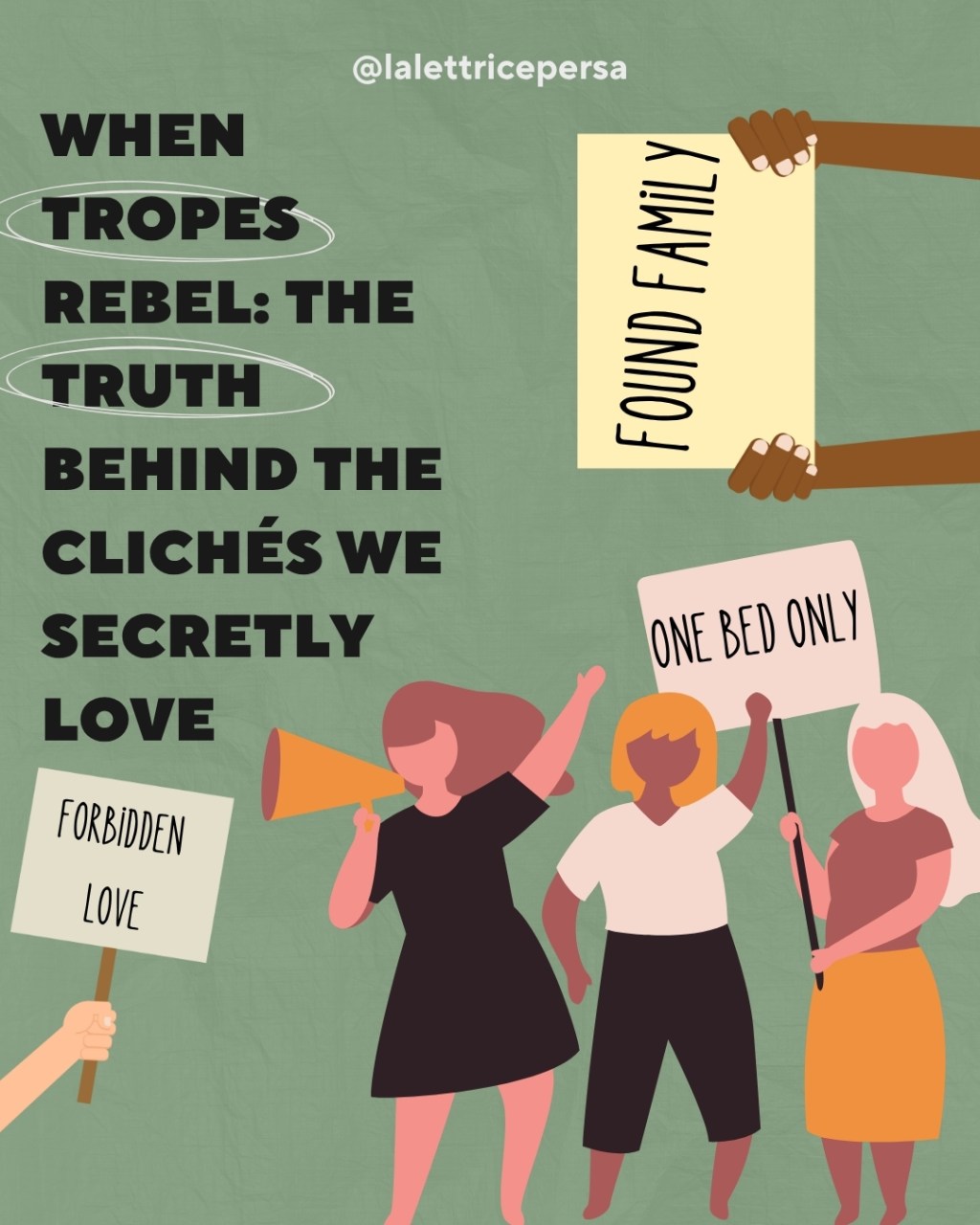
More than ten years ago, when I first (somewhat passively) entered the world of book blogging (mainly because my parents and the two friends I had were tired of wasting hours with me trying to choose among hundreds of new releases in bookstores) I don’t recall there being this frantic race from one trope to another. Nor that reading itself depended on the presence, or sometimes absence, of these elements.
And yet, today they’ve become absolutely essential.
Tropes influence our reading choices and guide modern writers in shaping and developing their stories.
And honestly, that’s a good thing.
I’ve lost count of the new literary loves I’ve discovered, books I would’ve never picked up if it hadn’t been for that one specific trope mentioned in the description. Not to mention the disasters I’ve avoided! I would’ve wasted both time and money if it weren’t for those small but incredibly helpful keywords.
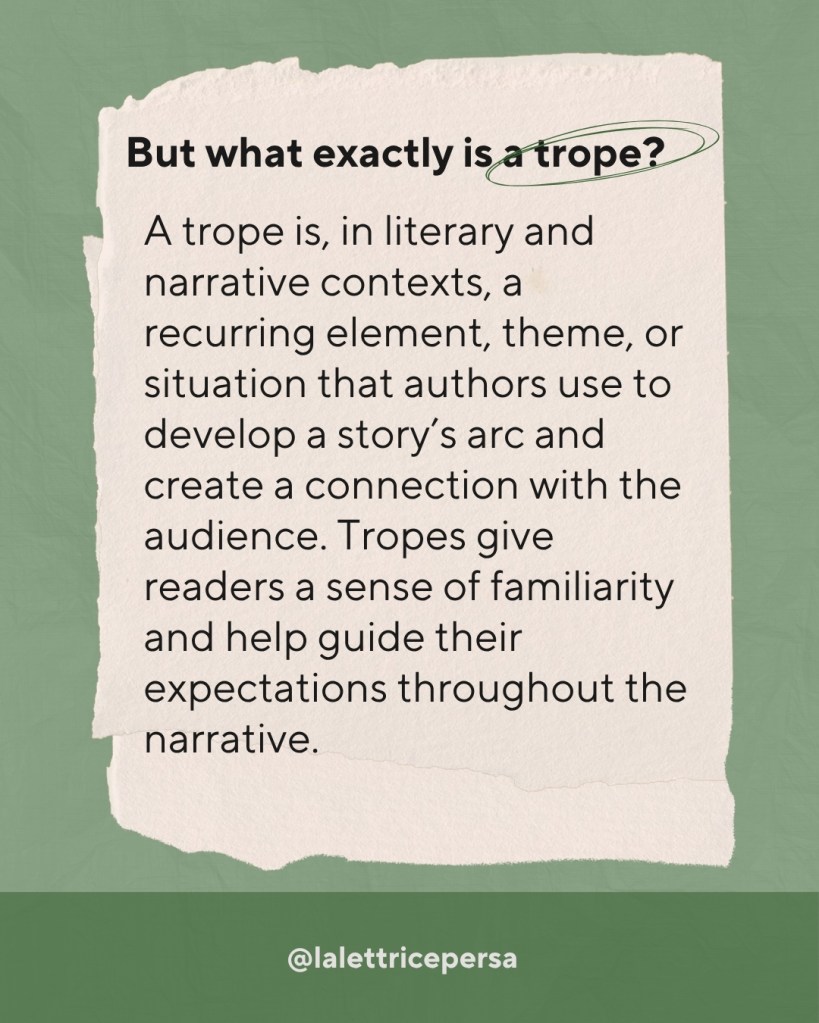
What exactly is a trope?
A trope—also known in Italian as a luogo comune, or cliché—is, in literary and narrative contexts, a recurring element, theme, or situation that authors use to develop a story’s arc and create a connection with the audience. Tropes give readers a sense of familiarity and help guide their expectations throughout the narrative.
Their purpose can be understood through several key ideas:
- To create narrative patterns, situations, or themes that, through repetition, foster a sense of familiarity for the reader.
- To help develop the characters and their arcs, whether in an original way or through a familiar cliché.
- To provide a base that can be twisted or reimagined to build entirely new stories.
Tropes come in many forms, seriously, there’s an endless list. They can be tied to narrative structures, character types, recurring situations, or thematic elements.
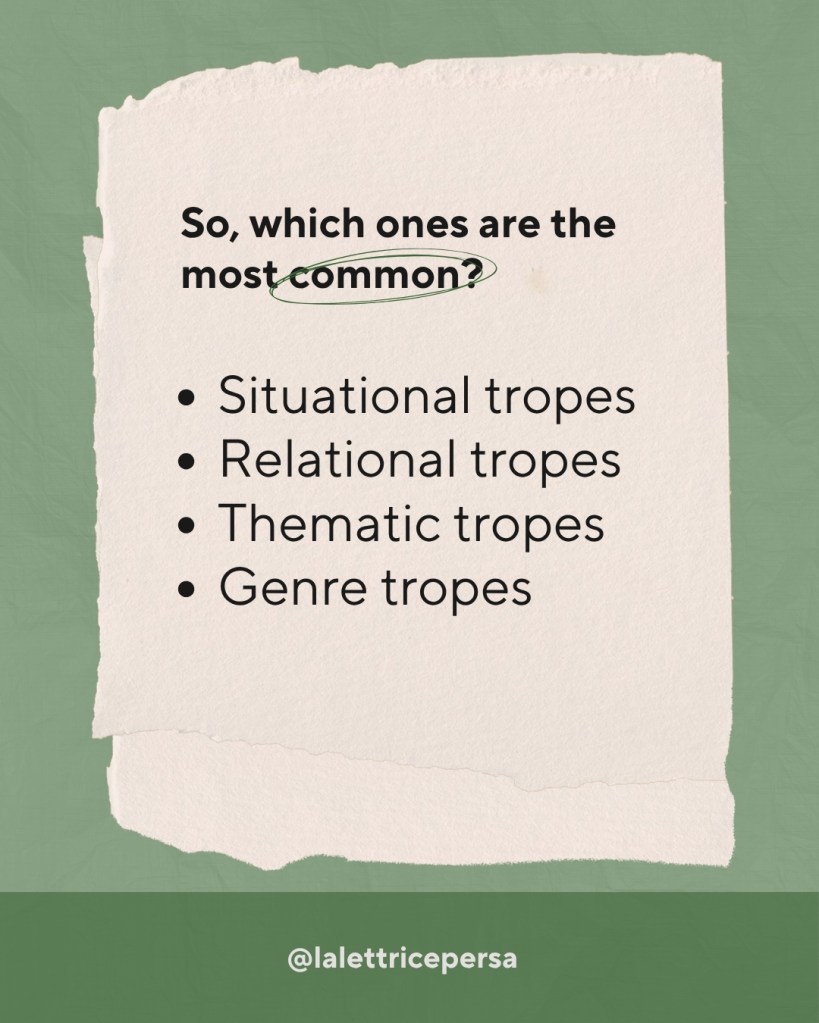
So, which ones are the most common?
Today, we generally recognize several main categories:
- Situational Tropes: These are recurring narrative setups based on a specific event or situation within a story (as opposed to broader tropes that define the entire plot). Examples include forced proximity, fake dating, and one bed only.
- Relational Tropes: Mostly (but not exclusively) found in romance, these are used to create expectations and dynamics between characters. They serve as a shorthand between author and reader to convey emotional themes and conflicts. Examples include enemies to lovers, love triangle, and second chance romance.
- Thematic Tropes: Recurring themes or situations that help define or communicate the story’s tone and direction. They establish recognizable structures or settings, such as small town, found family, social gap, or age gap.
Genre Tropes: These are the recurring structures, themes, or situations that characterize a literary genre (romance, fantasy, mystery, etc.). They make stories instantly recognizable to readers and provide a sense of reassurance, while giving writers a foundation from which to innovate. Think of young adult, the chosen one, the prophecy, or summer romance.
How can we classify tropes?
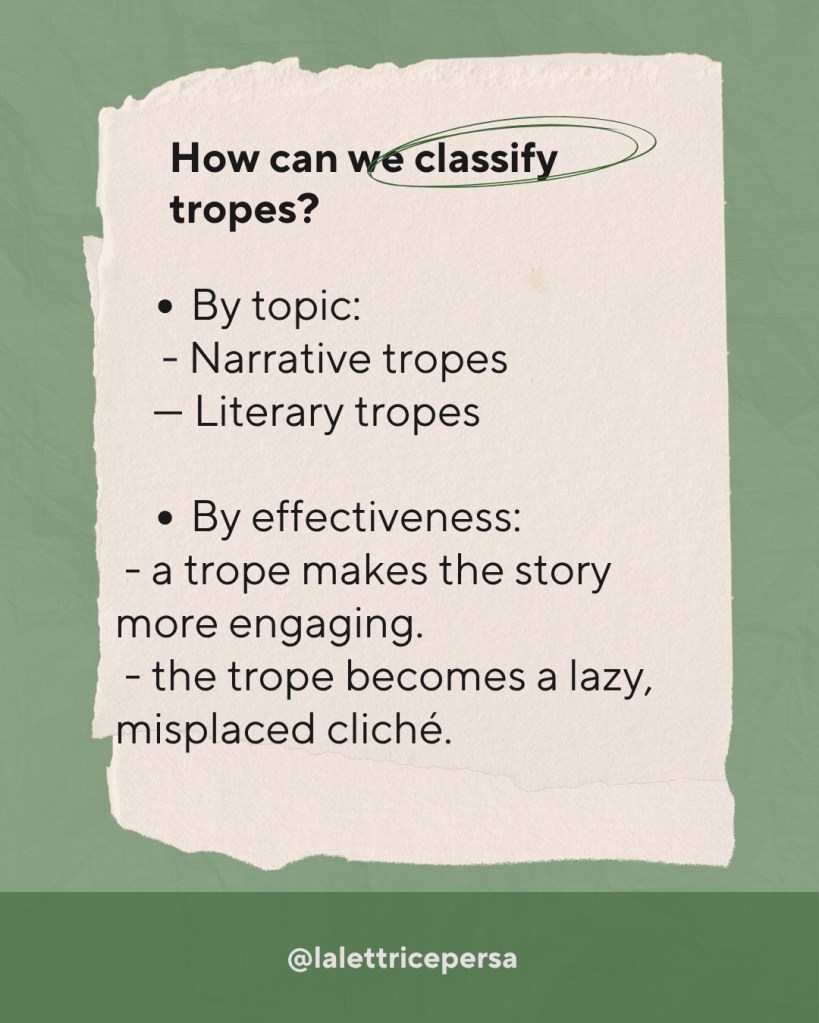
There are two main methods (and honestly, maybe the only ones that make sense):
- By topic:
- Narrative tropes – recurring themes and situations.
- Literary tropes – recurring motifs or symbolic situations.
- Narrative tropes – recurring themes and situations.
- By effectiveness:
- When well-used, a trope makes the story more engaging.
- When well-used, a trope makes the story more engaging.
When poorly used, it becomes a lazy, misplaced cliché.
Why are tropes so important today?
Tropes matter because they create familiar narrative structures while helping readers immerse themselves in a story. They offer emotional comfort and guide readers through what to expect.
For authors, tropes are creative tools. They can spark inspiration and allow innovation within established frameworks. Tropes are also essential for building both plots and characters, influencing how they grow and change throughout the story.
If we had to sum it up:
- They provide a common ground—a bridge between author and reader.
- They reassure the reader through familiar elements, making the experience more enjoyable.
- They structure the story, offering a framework for balanced, cohesive narratives.
- They stimulate originality, serving as a base for subversion and surprise.
- They guide character and plot development.
- They justify character motivations by clarifying which trope drives their actions.
- They attract a specific audience—readers who are already fond of certain dynamics.
- They offer predictable satisfaction, letting readers safely explore new authors and stories within genres they love.
And let’s face it: the right trope, used well, sells books.

So, what are the most loved (and hated) tropes right now?
- Enemies to Lovers – Two characters start off as rivals or opposites but fall for each other as tension turns into attraction.
- Fake Relationship – Two people pretend to be together for some reason, only to develop genuine feelings along the way.
- Found Family – A group of people with no blood ties come together to form a deep, chosen bond.
- Forced Proximity – Characters are trapped or stuck together by circumstance, leading to intimacy and connection.
- Age Gap – A story featuring a significant age difference between the main characters.
- Second Chance – Former lovers reunite and get another shot at happiness.
- One Bed Only – A situational trope where the characters must share a single bed, creating tension and emotional (or physical) closeness.

 La lettrice persa
Lascia un commento